
© All rights reserved.
Pollution Solution Pollution Solution
  • Home
  • Roadvent
  • Railvent
  • About us
  • Public sector
  • Private sector
  • Contact
  • Tunnelvent
  • Evidence
  • News
  • Accessibility statement
Pollution Solution
Pollution Solution
Home
Technology ▾
Roadvent
Roadside systems for traffic hotspots
Railvent
Platform hall systems for underground rail
Tunnelvent
Filtration for road tunnel ventilation outlets
Sectors ▾
Public sector
Helping councils meet air quality targets
Private sector
Protecting staff where engines can't be switched off
EvidenceNewsAboutContact
Capturing pollution at the source

Air quality technology for transport pollution hotspots.

We're a transport air quality solutions provider — engineering filtration technology that targets pollution hotspots at the source: road traffic hotspots for Roadvent, underground platform hall areas for Railvent, and road tunnel ventilation outlets for Tunnelvent. All three are built on the same principle: capture pollutants as close as possible to their source, stopping dispersion, dilution and human inhalation.

RoadventRailventTunnelvent
91%
Exposure reduction demonstrated at UTAC Millbrook
Independently tested
Full data available
Patented technology
21 territories
Explore the evidence →
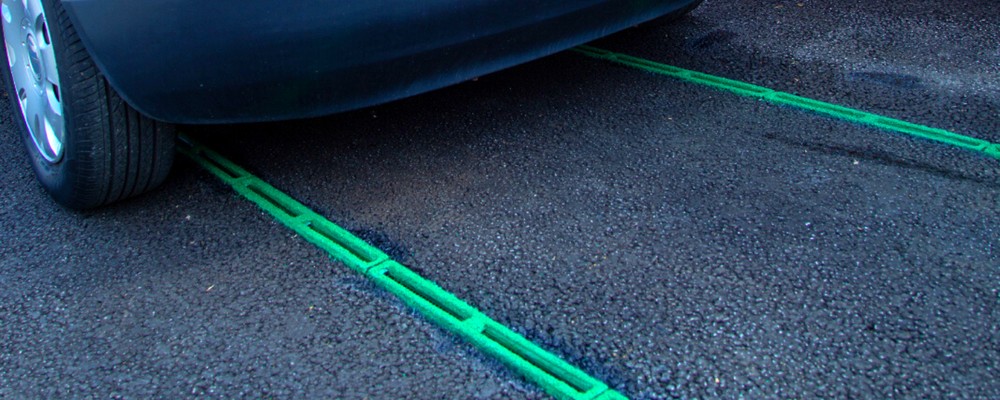
A car parked over green Roadvent slot drains set into the road surface
Roadvent slot drains, flush with the road
The technology

Capture, filter, monitor, release.

A proven, integrated system that captures, filters and removes transport pollution at source.

01
›
Capture
Polluted air is drawn in at the source.
02
›
Extraction
Fans move it through a sealed air path.
ESPHEPACarbon
03
›
Filtration
Electrostatic and HEPA filtration removes fine particles.
LIVE STATUSOnline
04
›
Monitoring
Sensors and monitoring software track performance and flag when filters need servicing.
05
Cleaner air
Cleaner air is released.
Our systems

Choose a system.

LIVE STATUSTwo slot drains per lane,flush with the roadCentral extraction pipeRoadside cabineton the footwayINSIDE THE CABINETFanESPHEPACarbon
Live & independently verified
Roadvent
Roadside pollution
Slot drains set into the carriageway, a central pipe and a purification cabinet beside the road.
Learn more →
BMS linkPlatformUnderground platform hallUnit in the track bed, beneath the railsINSIDE THE UNITESP (2 sections)HEPA
Ready for deployment
Railvent
Underground rail pollution
A unit in the track bed beneath the rails, drawing polluted air in from the far side of the track and releasing cleaner air on the platform side.
Learn more →
Existing tunnel fansPeople living nearbyOutletLIVE STATUSRoad tunnelINSIDE THE FILTER BANKESP collector arraysSealed path and plenum
Ready for deployment
Tunnelvent
Tunnel emissions
Filter banks at the ventilation outlet, fed by the tunnel's existing fans.
Learn more →
How it works

Polluted air drawn in, captured, cleaned.

The same principle in three settings: capture pollution as close as possible to its source, pull it through a sealed path and filter it before release. Select a stage to see what happens.

LIVE STATUSTwo slot drains per lane,flush with the roadCentral extraction pipeRoadside cabineton the footwayINSIDE THE CABINETFanESPHEPACarbon1Vehicle emissions2Roadvent inlet3Extraction4Filtration5Monitoring6Cleaner air

Vehicle emissions

Traffic pollution is at its most concentrated right where it is released, at the roadside, where people breathe it in.

Roadvent inlet

Discreet linear slot drains set into the carriageway sit almost flush with the road surface. Cars, cycles and pedestrians pass over them like any other section of road, while they draw in emissions at the point of release.

Air extraction

A central extraction pipe carries the air to a purification cabinet beside the road. Energy-efficient fans pull it through, and speed up as the filters load to hold suction constant.

Filtration

Three stages: electrostatic precipitation, HEPA filtration, then activated carbon to adsorb harmful gases before the air is released.

Monitoring

Every unit has a hardware controller, paired with monitoring software that shows live status, filter condition at each stage and alerts for the maintenance team, over the cabinet’s 4G connection.

Cleaner air

Filtered air is released at the roadside. Independently measured at UTAC Millbrook Proving Ground, Roadvent reduced exposure to vehicle emissions at child face-height by 91%.

BMS linkPlatformUnderground platform hallUnit in the track bed, beneath the railsINSIDE THE UNITESP (2 sections)HEPA1Train and trackparticulates2Intake4Extraction3Filtration5Monitoring6Cleaner air

Train and track particulates

Braking and track wear fill underground platform halls with fine, iron-rich particulates. Railvent is designed to capture them.

Intake

A curved inlet on the far side of the track draws in polluted air at platform level, close to where the particulates are released, with a mesh guard to keep out large debris. The unit itself sits in the track network beneath the rails.

Filtration

Two stages: an electrostatic precipitator (ESP), then HEPA filtration. Both are withdrawn from the side for servicing.

Air extraction

EC fans draw the air through the unit, and Railvent starts extracting as trains approach.

Monitoring

A connection to the station’s building management system (BMS), with bespoke hardware and software controls.

Cleaner air

Railvent is a recirculating unit: cleaner air is released on the platform side, back into the platform hall. It needs no changes to existing HVAC systems.

Existing tunnel fansPeople living nearbyOutletLIVE STATUSRoad tunnelINSIDE THE FILTER BANKESP collector arraysSealed path and plenum1Tunnel air2Sealed air path3Filtration4Monitoring5Cleaner air

Tunnel air

Existing tunnel ventilation fans extract polluted air from the tunnel, as they do today.

Sealed air path

A sealed path and plenum between the fan discharge and the filters makes sure that all of the air passes through them.

Filtration

Arrays of electrostatic precipitator (ESP) collectors capture fine particles with very little resistance, which matters for safety provisions in the event of a tunnel fire. Collectors are swapped out and the used ones taken away to be cleaned.

Monitoring

Monitoring and controls track the condition of the filter arrays, so that collector swaps can be planned.

Cleaner air released

Filtered air leaves through the outlet, so less pollution reaches people living nearby.

The global problem
99%
of the world's population lives where air pollution exceeds WHO guideline limits.
HEALTH EFFECTS INSTITUTE, 2024
8.1M
lives lost each year to air pollution.
HEALTH EFFECTS INSTITUTE, STATE OF GLOBAL AIR 2024
700,000
deaths in children under five.
HEALTH EFFECTS INSTITUTE, STATE OF GLOBAL AIR 2024
~90%
of NCDs such as heart disease, stroke and lung cancer is driven by the air we breathe.
CMO ANNUAL REPORT 2022
Air pollution is a top-five global risk factor for deaths in children under five.
SOURCE: HEALTH EFFECTS INSTITUTE, STATE OF GLOBAL AIR 2024
PM2.5 exposure is linked to respiratory disease, Alzheimer's and cancer.
SOURCE: DEFRA EVIDENCE SUBMISSION
Why target hotspots

Hotspots are where pollutant concentrations are highest, human exposure is greatest, and compliance can be achieved fastest and most cost-effectively. Road, rail and tunnel hotspots share the same pattern: emissions build up, and the space can't dilute them.

Road hotspots
High traffic volume
→
Build-up of vehicle emissions
Enclosed architecture and layout
→
Insufficient airflow and dilution
Roadvent · captures emissions in the road surface
Underground rail hotspots
Physical grinding of metallic components
→
Build-up and resuspension of emissions
Indoor environment
→
Insufficient airflow and dilution
Railvent · captures in underground rail platform halls
Road tunnel hotspots
Traffic in an enclosed bore
→
Emissions build up
Fans extract tunnel air
→
Pollution released at the outlet
Tunnelvent · captures at the tunnel ventilation outlet
Active travel and public transport are the long-term answer to transport emissions, but behaviour change alone doesn't address the exposure people face at hotspots today. Cyclists and pedestrians breathe more air, closer to the source; bus stop and station users face concentrated exposure. 

Roadvent patent protection — 21 territories

Patent protection in 21 territories.

A European patent validated in 18 states, plus the United States, China and Hong Kong.

Europe — European patent, validated in 18 states
AustriaBelgiumSwitzerland & LiechtensteinGermanyDenmarkSpainFinlandFranceUnited KingdomIrelandItalyLuxembourgMonacoNetherlandsNorwayPortugalSwedenGreece
Global
United StatesChinaHong Kong
21
territories
protected
Europe, in detail
Pollution Solution Holdings Limited (UK)
Registered in England and Wales · Company no. 12264671
Registered office: Manufactory House, Bell Lane, Hertford, SG14 1BP
contact@pollutionsolution.co.uk
(+44) 0203 475 8741
Independent testing & standards
Roadvent exposure reduction verified at UTAC Millbrook Proving Ground.
See the test reports
Pendulum slip-resistance tested to BS EN 16165 Annex C.
Load class F900 (EN 1433).
Patents
Roadvent patent protection in 21 territories: European patent validated in 18 states, plus the United States, China and Hong Kong.
Where we are protected
Company
Accessibility statementPrivacy PolicyCookie PolicyContact
© 2026 Pollution Solution Holdings Limited. We aim to meet WCAG 2.2 AA; read our accessibility statement.
  • Home
  • Roadvent
  • About us
  • Public sector
  • Private sector
  • Contact
  • Privacy Policy
  • Cookie Policy

Contact us

Email: contact@pollutionsolution.co.uk
Telephone: (+44) 0203 475 8741

*91% pollutant exposure reduction was established during testing completed by Cambustion. Further information available upon request.

2026 All rights reserved

in
F.A.Q
Support Forum
Video Tutorials

Search panel can contain any widgets and shortcodes.

Call us: 0 800 255 22 55