
Technology / Railvent
Ready for deployment · for underground rail networks
Cleaner air on underground rail platforms.
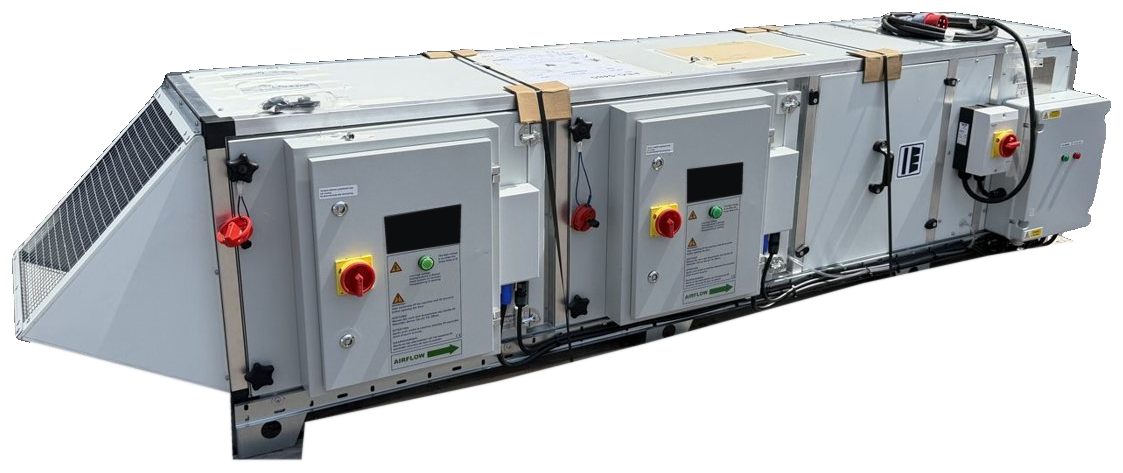
Railvent activates suction as trains approach, capturing iron-rich particulates through heavy-duty filtration. The unit sits discreetly below the rails, away from the platform itself, mitigating dispersion towards waiting passengers — with no changes needed to existing HVAC systems.
Railvent is built for underground rail networks. It applies the same patented capture-and-filter approach as Roadvent to platform hall areas — where pollution from rail operations concentrates and lingers most.
Enquire about Railvent Download technical specification (PDF)
Why it matters
The UK’s worst pollution hotspot sits below ground.
Underground railways have limited ventilation, so particles from braking, the wheel and the rail, and pantographs build up and linger on the platform. Particulate levels in the London Underground are among the highest recorded in any European subway system.
“Air pollution in stations is a particular problem and should be a priority. Underground railways and metros often have significant PM2.5 due to limited ventilation… Improvements in braking, ventilation and/or filtration are possible solutions.”
SIR CHRIS WHITTY — CHIEF MEDICAL OFFICER FOR ENGLAND · CMO ANNUAL REPORT 2022
01 · The hotspot
Concentrations far above the road
Average particulate concentrations in the London Underground were found to be up to 30 times higher than near busy London roadside monitoring sites. Railvent is designed to capture the iron-rich particulates in this air.
REFERENCE: COMEAP statement on the London Underground (Public Health England, Jan 2019)
02 · Staff and passengers
Millions breathe this air
With the Tube reaching around 4 million journeys a day, and Underground users aged 30–59 spending an average of 60 minutes a day underground, a very large number of passengers and the staff who work in stations and on trains are exposed. A study of metro systems in China found iron-oxide nanoparticles from wheel, rail and brake friction in the lung tissue of commuters, and mice breathing the same particles developed marked lung damage — pointing to a potential risk to public health.
REFERENCES: RailUK, TfL figures (Nov 2023) · COMEAP statement on the London Underground
03 · Why it is a priority
Recognised at the highest level
The Chief Medical Officer for England says air pollution in stations is a particular problem and should be a priority, and names ventilation and filtration among the possible solutions. Railvent offers cleaner air for passengers and workers without changing existing HVAC systems.
REFERENCE: Chief Medical Officer’s annual report 2022: air pollution
The research
Nature Cities · February 2026
Airborne magnetic nanoparticles pose pulmonary risks to urban commuters, evidenced by Hangzhou and Zhengzhou subways
Researchers led by Weijun Li and Xiaokun Ding sampled dust on Hangzhou subway lines, identified iron-oxide nanoparticles created by wheel-rail and brake friction, and found them in the lung tissue of commuters. Mouse inhalation experiments showed the same particles can cause pronounced lung injury.
Scientific Reports · 2022
Magnetic and microscopic investigation of airborne iron oxide nanoparticles in the London Underground
Researchers led by H. A. Sheikh analysed particulate matter collected from platforms, ticket halls and train operator cabins across the London Underground. The particles were predominantly maghemite (iron oxide) nanoparticles of 5–500 nm, forming aggregated clusters.
Atmospheric Environment · Volume 367, 2026
Exposure assessment and particle number size distribution in train carriages in the London subway
Michael Hedges and colleagues measured particle exposure and particle number size distribution inside train carriages on the London Underground.
The unit
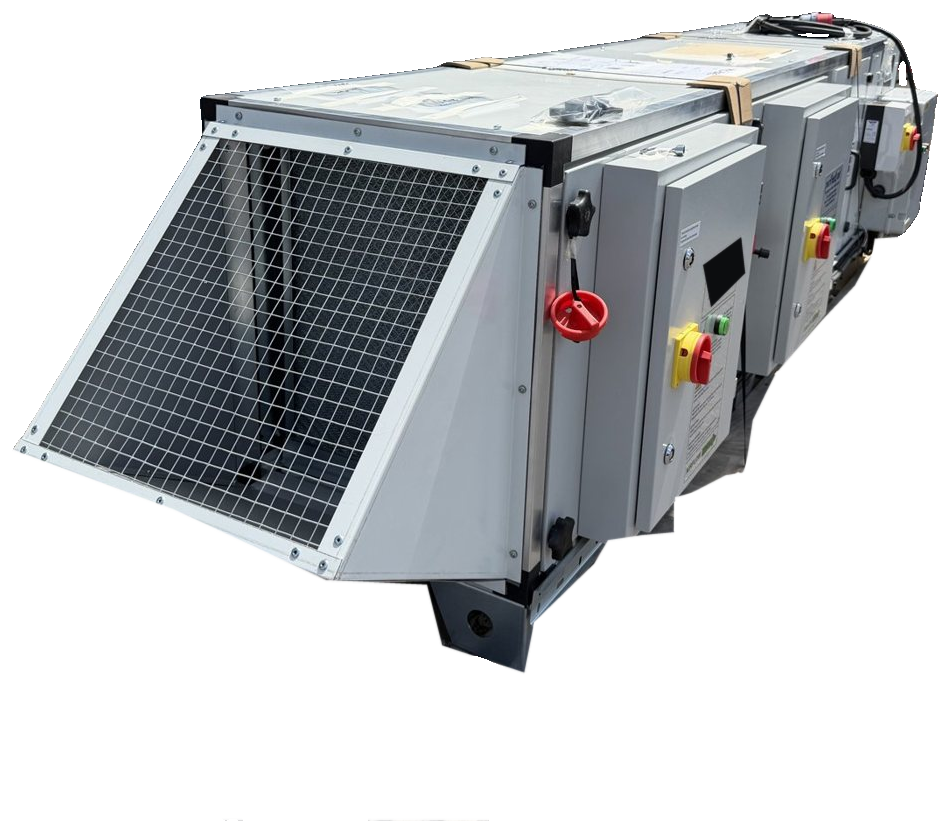
Guarded hood
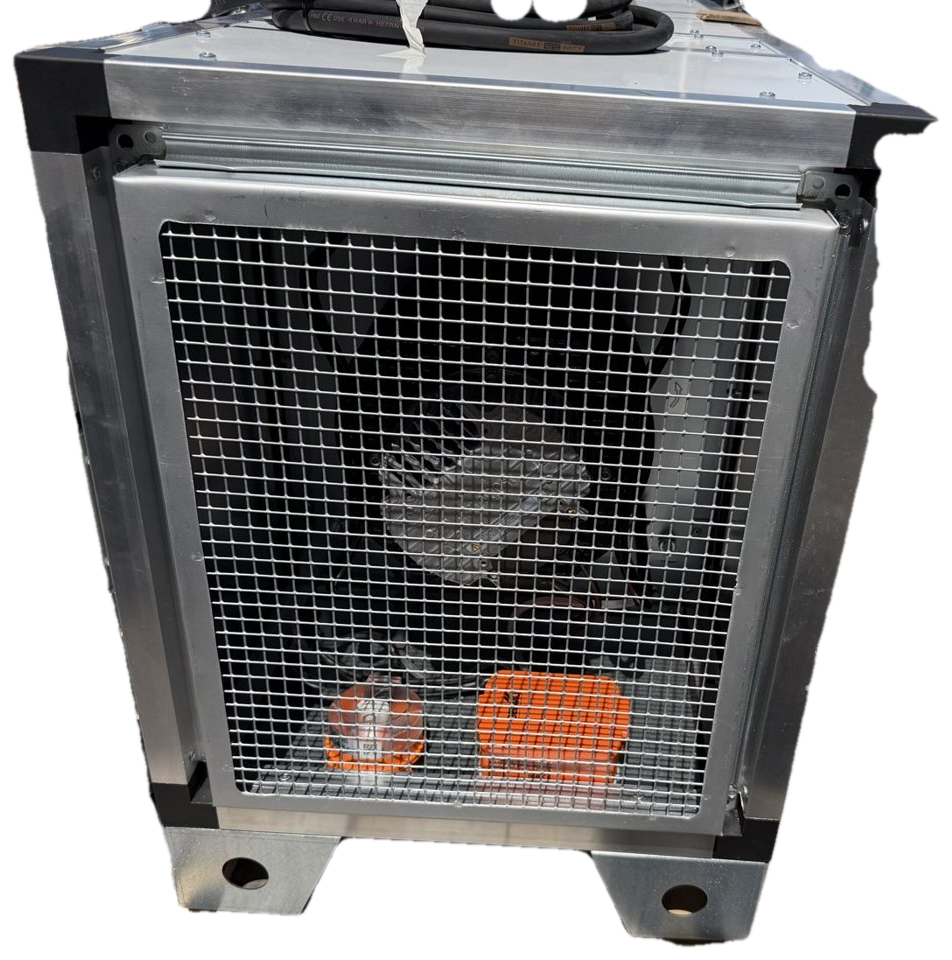
Fan guard
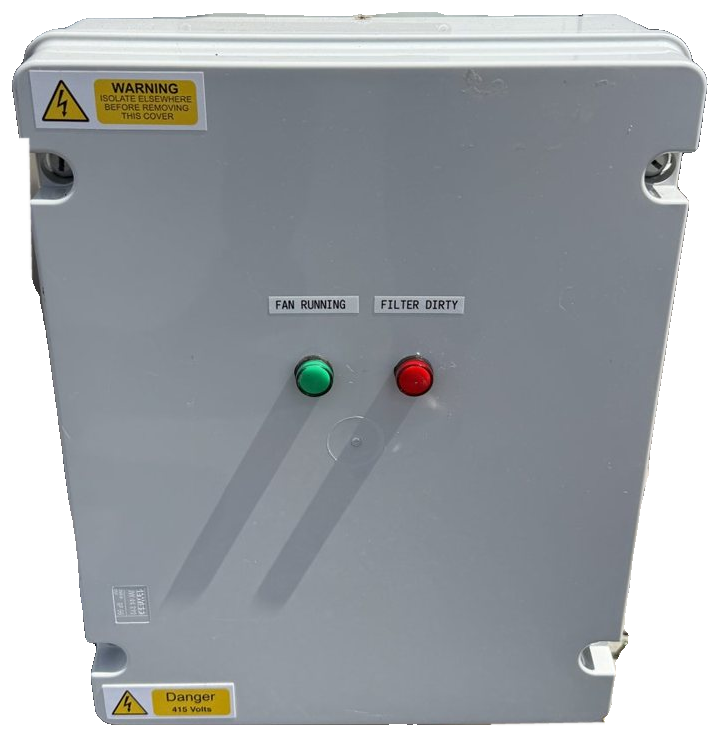
Control panel — fan running / filter dirty indicators
Why underground rail networks
Up to 30×
Particulate levels vs busy London roadsides
~4M
Daily journeys
60 min
Average time underground per day (ages 30–59)
Average particulate concentrations in the London Underground were found to be up to 30 times higher than near busy London roadside monitoring sites. Reference: COMEAP statement on the London Underground (Public Health England, Jan 2019). Journeys: TfL figures via RailUK (Nov 2023). Time underground: COMEAP statement above.
How Railvent works
Key components: two-stage filtration
Stage 1: electrostatic precipitator (ESP)
Stage 2: HEPA filtration
Building management system (BMS) connection
Bespoke hardware and software controls
Responsible for an underground rail network? Let’s talk about your platforms.
Our other systems
Live & independently verified
Roadvent
Captures roadside vehicle emissions at traffic pollution hotspots.
Explore Roadvent →Ready for deployment
Tunnelvent
Filters the air at road tunnel ventilation outlets.
Explore Tunnelvent →