Cleaner air on underground rail platforms
Railvent activates suction as trains approach, capturing iron-rich particulates through heavy-duty filtration. The unit sits discreetly below the rails, away from the platform itself, mitigating dispersion towards waiting passengers — with no changes needed to existing HVAC systems.
Railvent is built for underground rail networks. It applies the same patented capture-and-filter approach as Roadvent to platform hall areas — where pollution from rail operations concentrates and lingers most.
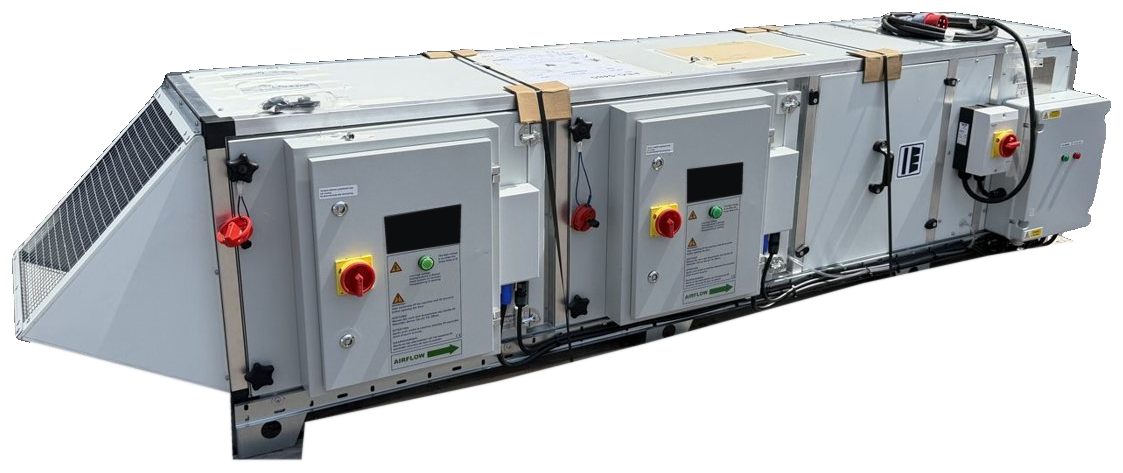
How Railvent works.
Select a stage to see what happens.
Train and track particulates
Braking and track wear fill underground platform halls with fine, iron-rich particulates. Railvent is designed to capture them.
Intake
A curved inlet on the far side of the track draws in polluted air at platform level, close to where the particulates are released, with a mesh guard to keep out large debris. The unit itself sits in the track network beneath the rails.
Filtration
Two stages: an electrostatic precipitator (ESP), then HEPA filtration. Both are withdrawn from the side for servicing.
Air extraction
EC fans draw the air through the unit, and Railvent starts extracting as trains approach.
Monitoring
A connection to the station’s building management system (BMS), with bespoke hardware and software controls.
Cleaner air
Railvent is a recirculating unit: cleaner air is released on the platform side, back into the platform hall. It needs no changes to existing HVAC systems.
The UK's worst air pollution hotspot sits below ground.
Underground railways have limited ventilation, so particles from braking, the wheel and the rail, and pantographs build up and linger on the platform. Particulate levels in the London Underground are among the highest recorded in any European subway system.
“Air pollution in stations is a particular problem and should be a priority. Underground railways and metros often have significant PM2.5 due to limited ventilation… Improvements in braking, ventilation and/or filtration are possible solutions.”
Average particulate concentrations in the London Underground were found to be up to 30 times higher than near busy London roadside monitoring sites. Railvent is designed to capture the iron-rich particulates in this air.
With the Tube reaching around 4 million journeys a day, and Underground users aged 30–59 spending an average of 60 minutes a day underground, a very large number of passengers and the staff who work in stations and on trains are exposed. A study of metro systems in Hangzhou and Zhengzhou - China, found iron-oxide nanoparticles from wheel, rail and brake friction in the lung tissue of commuters, and mice breathing the same particles developed marked lung damage — pointing to a potential risk to public health.
The Chief Medical Officer for England says air pollution in stations is a particular problem and should be a priority, and names ventilation and filtration among the possible solutions. Railvent offers cleaner air for passengers and workers without changing existing HVAC systems.
Researchers led by Weijun Li and Xiaokun Ding sampled dust on Hangzhou subway lines, identified iron-oxide nanoparticles created by wheel-rail and brake friction, and found them in the lung tissue of commuters. Mouse inhalation experiments showed the same particles can cause pronounced lung injury.
Researchers led by H. A. Sheikh analysed particulate matter collected from platforms, ticket halls and train operator cabins across the London Underground. The particles were predominantly maghemite (iron oxide) nanoparticles of 5–500 nm, forming aggregated clusters.
Michael Hedges and colleagues measured particle exposure and particle number size distribution inside train carriages on the London Underground.
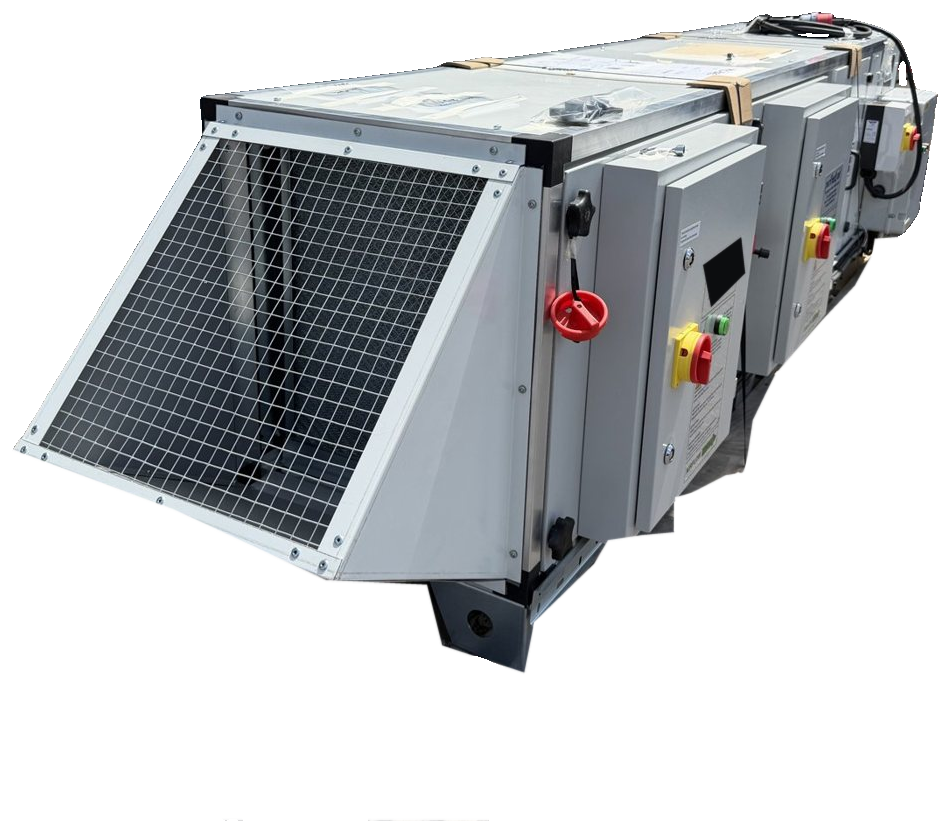
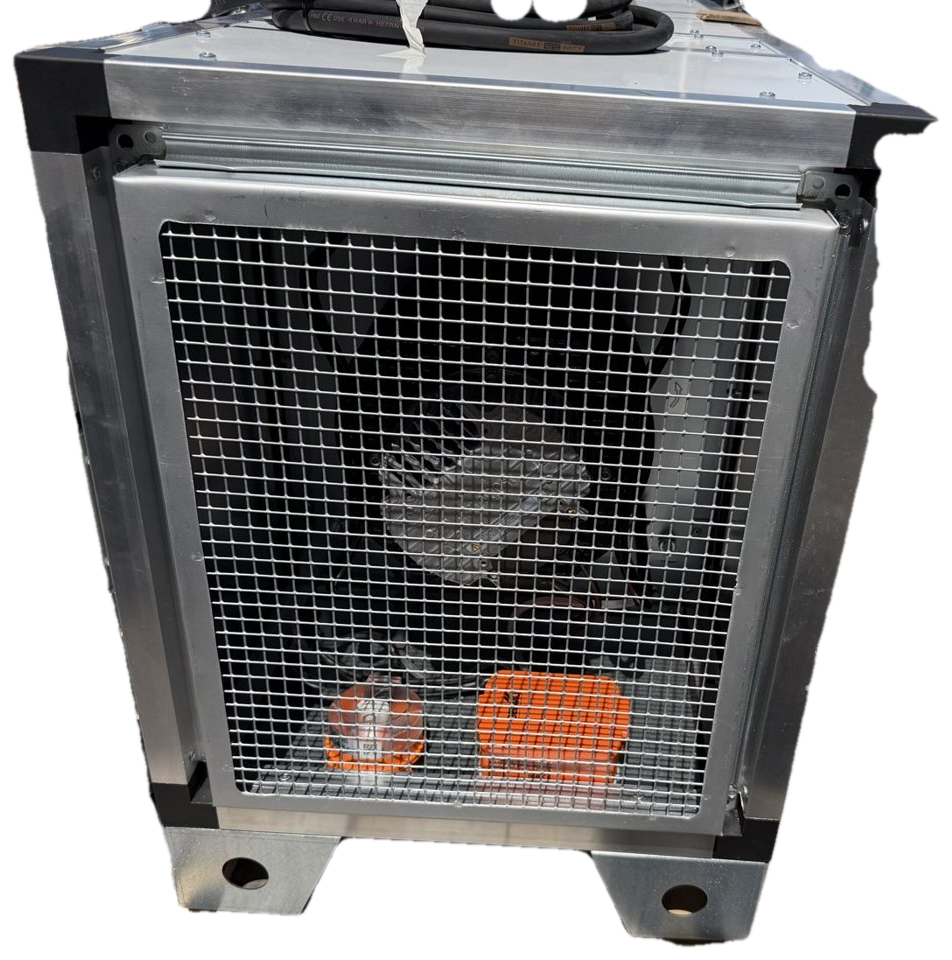
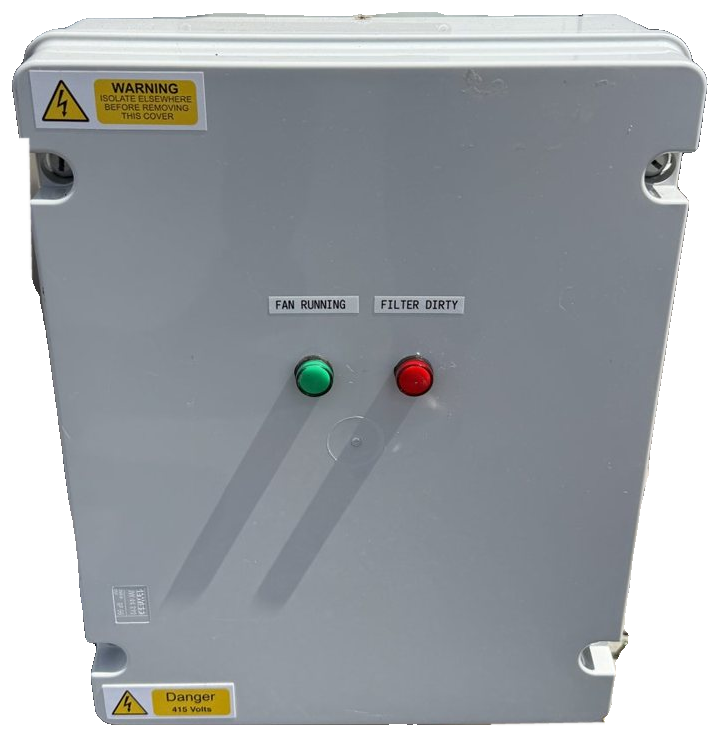
Captures roadside vehicle emissions at traffic pollution hotspots.
Explore Roadvent →Filters the air at road tunnel ventilation outlets.
Explore Tunnelvent →Registered office: Manufactory House, Bell Lane, Hertford, SG14 1BP
(+44) 0203 475 8741